The Sunken Spot In The Side Yard That Becomes A Full Replacement
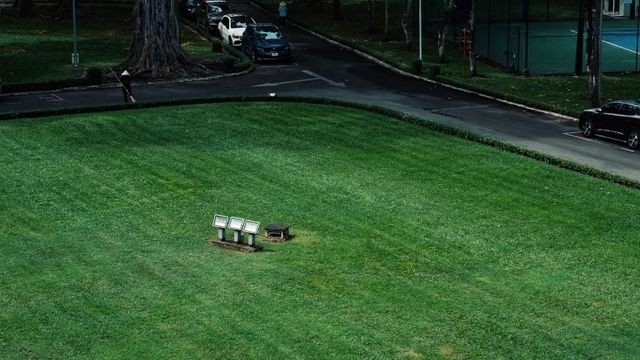
The rain ran Tuesday through Thursday, hard for Scottsdale, and by Friday afternoon the side yard had a dip in it. Not a hole. A shallow saucer roughly the width of a car hood, soft enough that a heel sank a little near the old concrete lid nobody in the family had looked at in twenty years. The house was bought in 1974 and has held six people across three generations, so the first guess was landscaping, then a broken irrigation line, then soil settling after a wet week. That soft spot is usually what sends a family searching for septic systems scottsdale az on a Saturday morning, before anyone has said the word cesspool out loud. And a brick-lined cesspool from the 1970s is not something a patch fixes twice.
A cesspool is the older idea of onsite wastewater, meaning a pit, often lined with brick or block, that holds solids while the liquid seeps out through the sides and the bottom. There is no tank, no separate drain field, and no way to inspect the components because there are no components. Here is the argument of this whole article in one sentence: paying for a real inspection and then replacing the old system once costs a family less, in money and in worry, than two more patch repairs and another wet season. The unknown hole in the yard is the expensive part, and an inspection is what turns it into a defined project with a number attached to it.
A Sinking Yard Is Rarely A Landscaping Problem
Ground does not sink for no reason. When a cesspool’s brick sidewall loses its mortar or the cap over it starts to fail, the soil above has somewhere to go, and the surface follows it down slowly until one wet week makes the change obvious to everyone. In practice, what usually turns up under a soft depression on a 1970s lot is not a cracked pipe at all but that old pit losing its walls. The yard tells on itself before the plumbing does, which is a small mercy, because a slow depression is a warning and a sudden collapse is not.
Until somebody qualified has looked, treat the spot as off limits. Rope it off, park nothing on it, and keep children and pets away from that ground completely. Nobody in the household should walk on the soft area, stand at the edge of it, lift the lid, or reach inside for any reason at all. If a person falls in, do not climb down after them, because a rescuer becomes the second victim within seconds: call 911 from where you are standing.
Inspectors Ask Different Questions About Old Cesspools
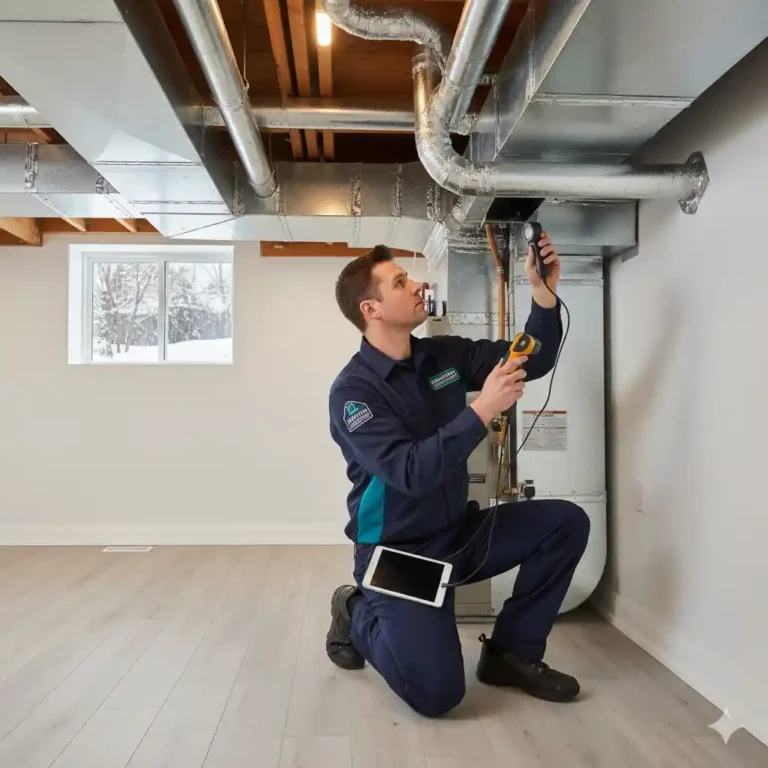
An inspection on a modern septic system is largely a maintenance conversation about sludge depth, baffle condition, and how well the drain field is absorbing. On a 1974 cesspool the questions change, because the inspector is establishing what exists at all: the depth and diameter of the pit, whether the lining is intact, how close it sits to the property line and to any well, and whether the surrounding soil will accept a leach field once a real tank goes in. In August 2026 the U.S. Environmental Protection Agency’s guidance on resolving septic system malfunctions still puts the baseline at an inspection every one to three years and pumping every three to five years, or sooner once solids reach about two-thirds of the tank volume, and it names inadequate maintenance as a primary cause of system failure. A household of six generates more than that schedule assumes, and a cesspool gives you no tank volume to measure in the first place.
The other reason this is not a do-it-yourself afternoon is the air. An old cesspool or septic tank is a confined space, and the gas that collects inside it can drop a person unconscious in seconds and kill them, because hydrogen sulfide and plain oxygen displacement give almost no warning. Digging beside one carries its own rules: OSHA’s excavation standard requires that any excavation deeper than 5 feet be protected against cave-in by sloping, benching, shoring, or an equivalent system designed to resist the loads on it without failing. Only trained crews with proper ventilation, shoring and equipment should ever open or excavate one.
Paperwork matters more here than most families expect. Arizona’s environmental agency runs an online portal called myDEQ, where onsite wastewater permitting lives, and looking costs nothing even if a 1974 pit predates any record worth finding. Requirements are not uniform statewide either, so what Maricopa County asks for on a replacement is not necessarily what a neighboring county asks, and the honest answer to whether a permit is needed is that somebody has to check your address against your system type. A contractor who prepares and files those applications as part of the job removes the single step homeowners stall on for months.
Replace Once Rather Than Patch Twice
Say this family has already paid twice, once to pump the pit and re-mortar the cap after the first sag, and once more two summers later when the same corner dropped again. Call those repairs $1,800 and $2,600, illustrative figures rather than a quote, and notice that neither one changed what is actually in the ground. Against them sits a $14,000 estimate for a properly sized tank and leach field, which is a hard number to hear out loud and is also the last time this line appears on the family’s list. Patching an old cesspool buys time, it never buys a system. Add a third repair at $2,500 and the gap narrows while the risk sits exactly where it was.
There is something worth saying about houses like this one, which is that plumbing is rarely why people hold onto them; the grandfather planted citrus by the fence in 1979 and the tree still bears fruit, and that is most of the reason nobody wants a backhoe in the side yard. But the tree is not the topic and the pit is. A replacement runs as a sequence rather than a single event: site evaluation and soil testing, tank sizing, permits, excavation, setting the tank, the leach field, the connection, and a final inspection before the yard is put back.
The soft spot in the side yard is not asking for topsoil. It is a question about what was installed in 1974 and what a household of six needs now, and it gets answered by somebody who opens the thing safely, measures it, and prices the entire path instead of the next patch. Families comparing septic systems scottsdale az should ask for soil testing and permit handling in writing alongside the tank price, since those are the parts that stall a project after the check is already written. Then the next wet week is just rain.